
Wolf Camp · Winchester, Idaho
The place itself.
Where the wolves lived, where the children came, and what it took to hand it back.
The place
Three hundred acres, near Winchester
The sanctuary is gone: between 2015 and 2017 the Center took down the buildings, the boardwalks, the utilities and miles of fencing, down to the barriers buried against digging. The map is the only way left to walk it.

Leased from the Nez Perce Tribe, and returned to them in 2017.
Three of them, inside double eight-foot fences with a barrier buried against digging.
Over the years the site was both sanctuary and classroom.
The A-Frame Visitor’s Center, built like a traditional longhouse.
What was where
Six places on that map, and what happened at each.
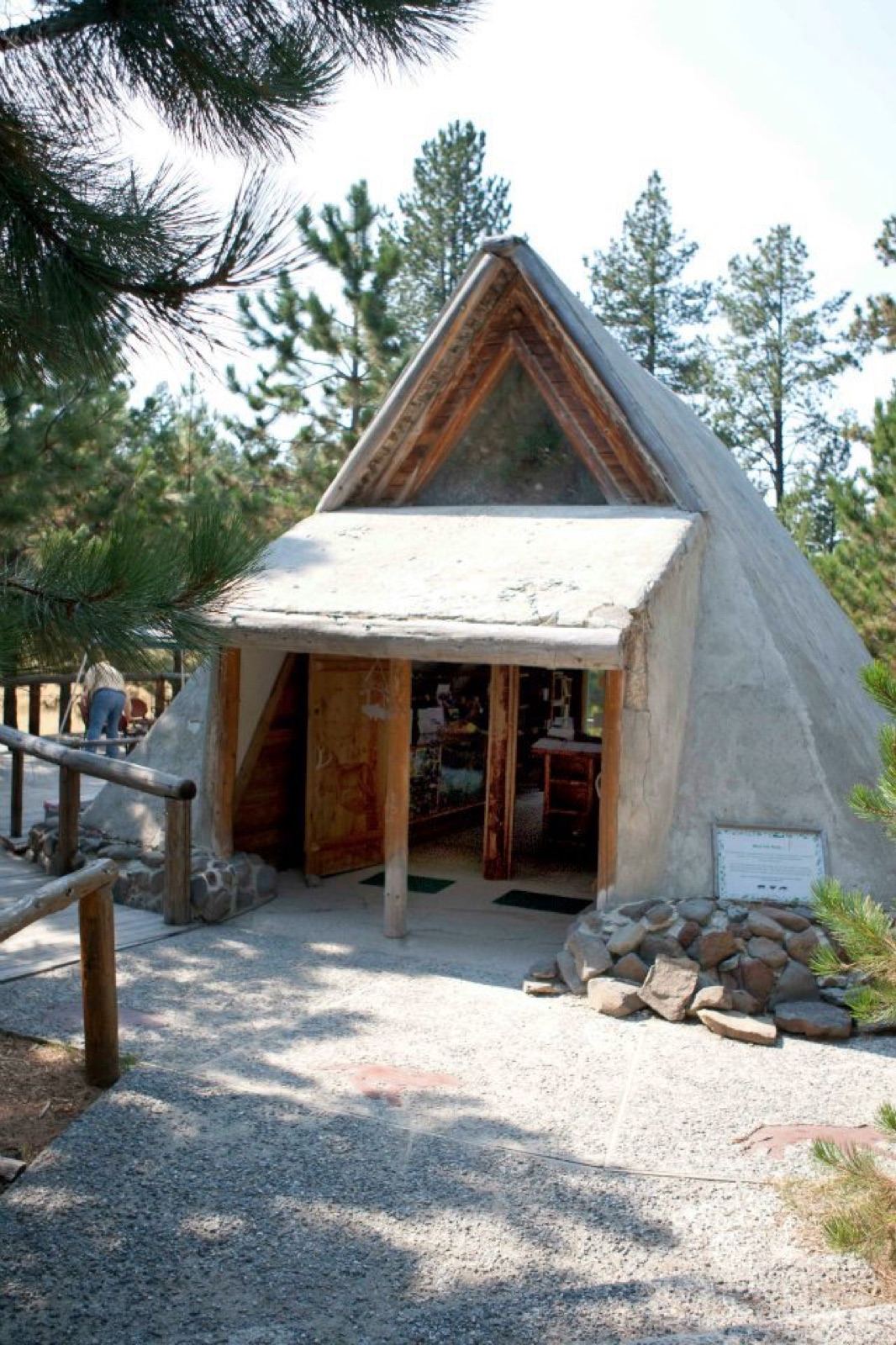
Classes met inside, under a loft full of skulls and bones. Visitors watched the meadow from its deck. It is the only thing still standing.
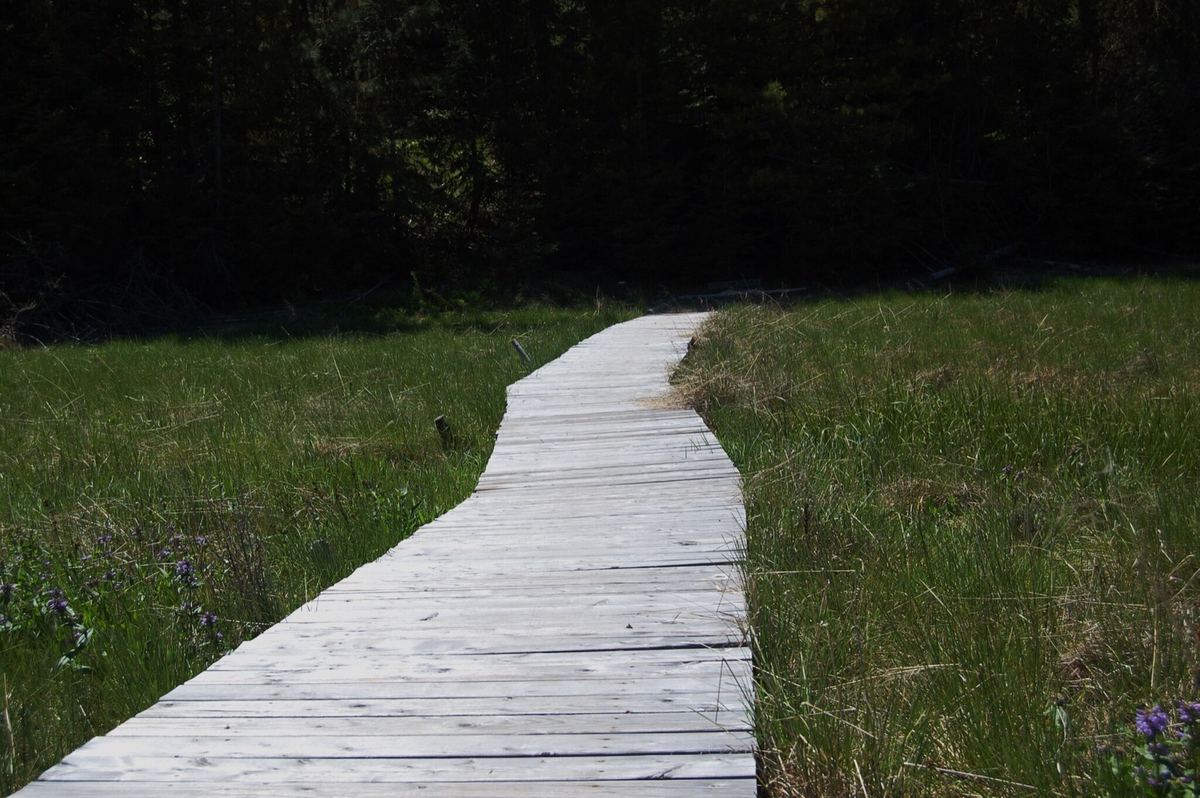
A raised walk out across the meadow. Sometimes Motomo or Piyip came to the fence to sniff, or lick, a flattened hand.
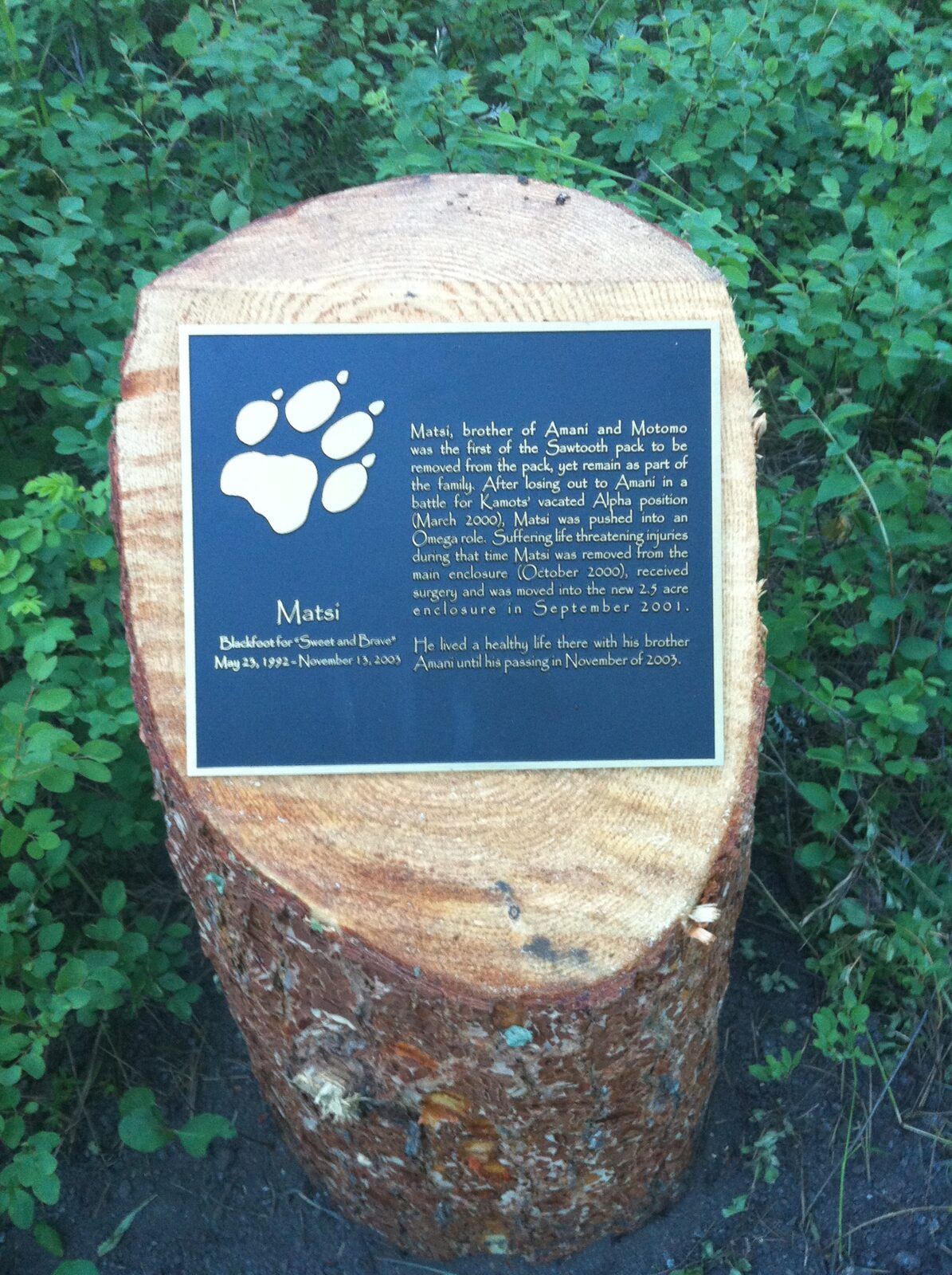
Every Sawtooth wolf has a plaque here with its name, what the name means, and its birth and death. Matsi was the first.
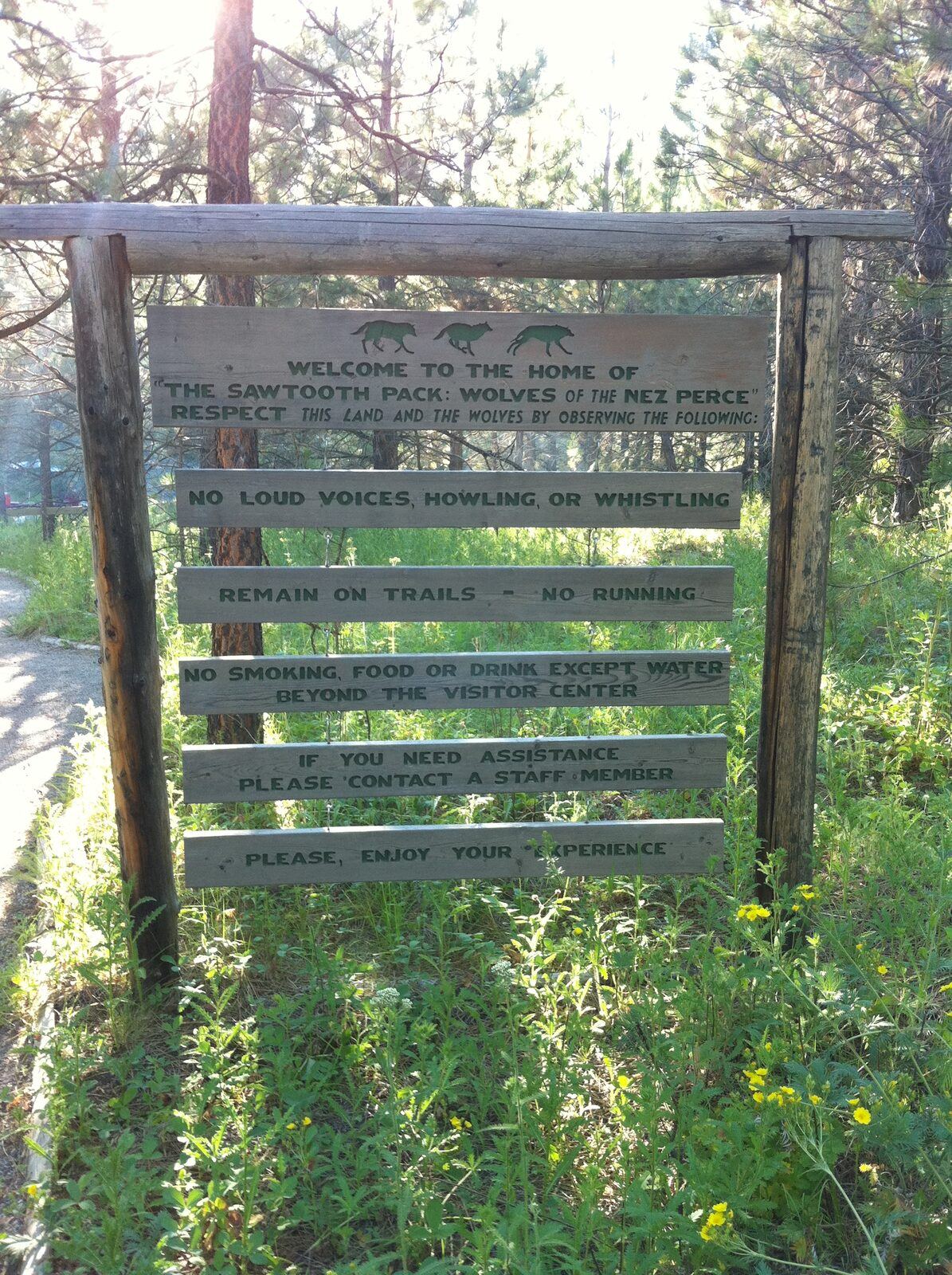
Where the welcome sign stood. Children came up this trail for thirty years.
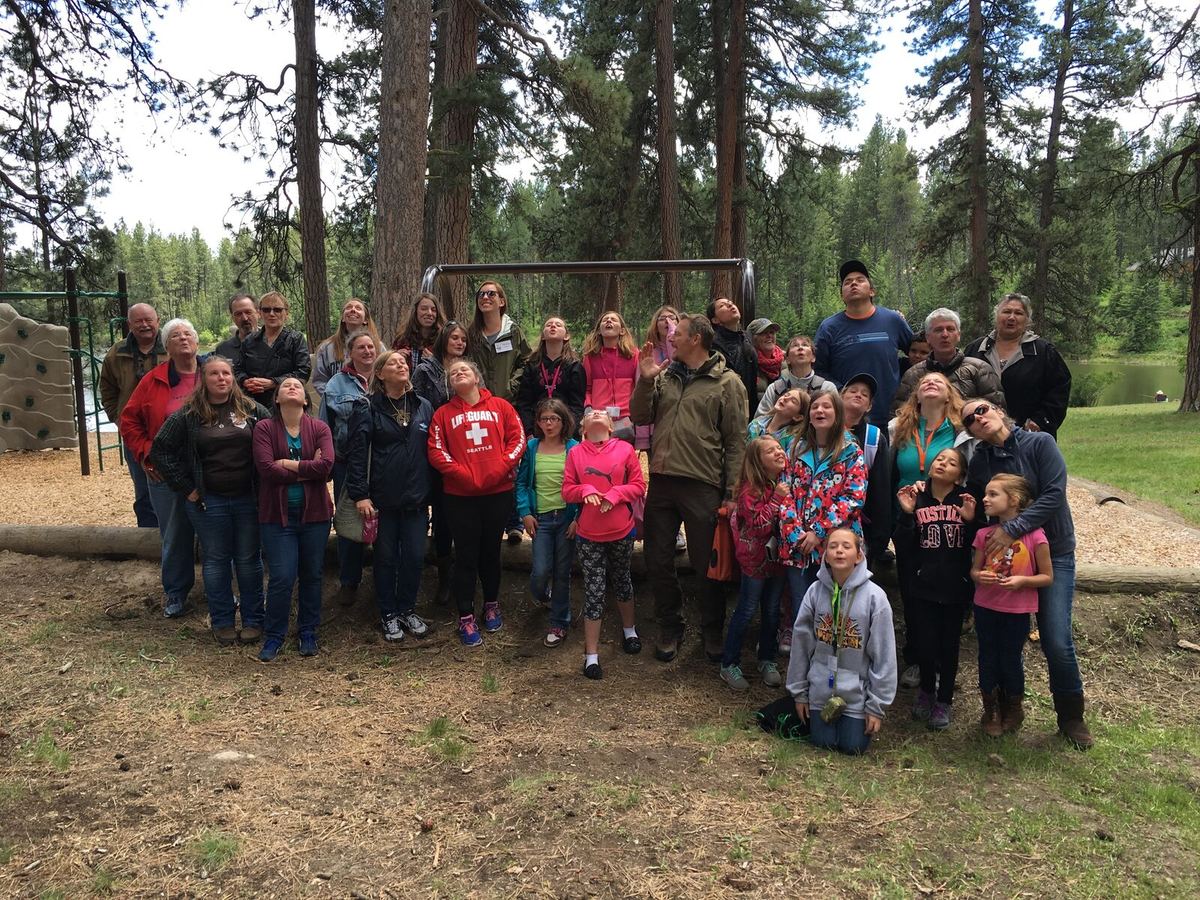
Big enough that the wolves were visible only when they chose to be, which was the point.
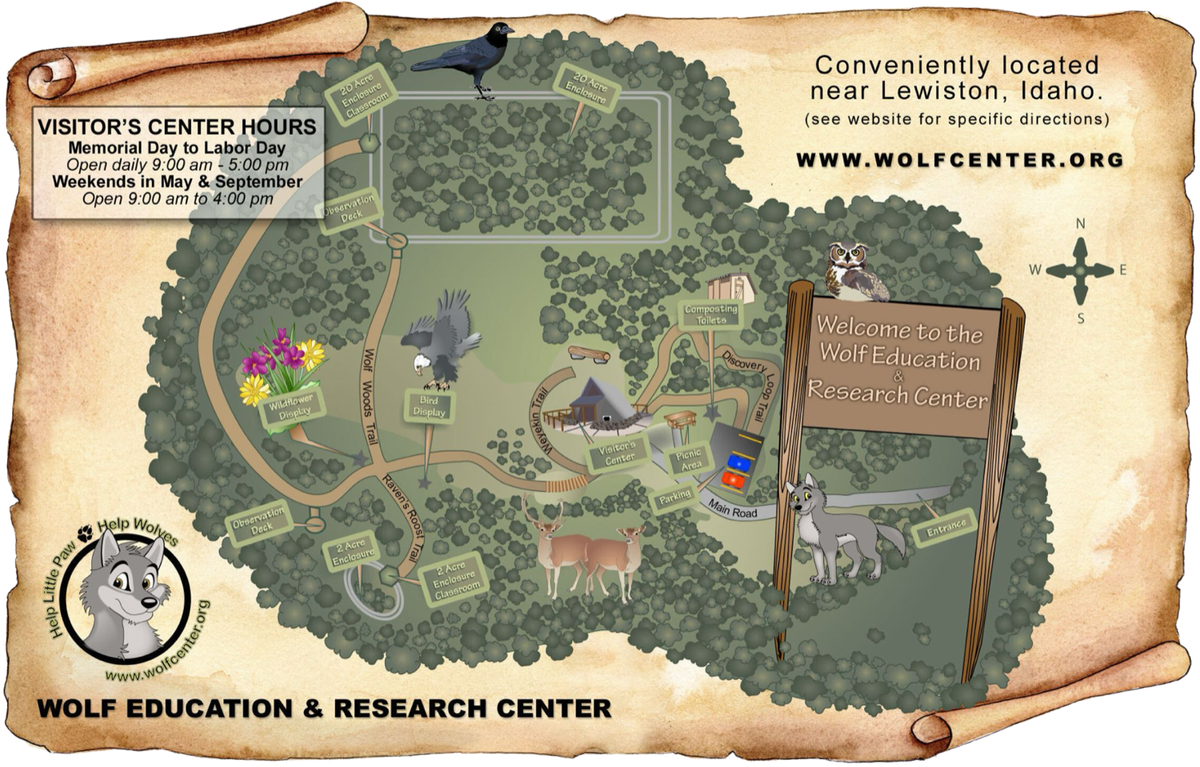
North central Idaho, on land held by the Nez Perce Tribe. One trail was named after Weyekin.
The land belongs to the Nez Perce Tribe. The Center held it on a fifteen-year lease, and when the lease ended it chose to clear the site rather than renew.